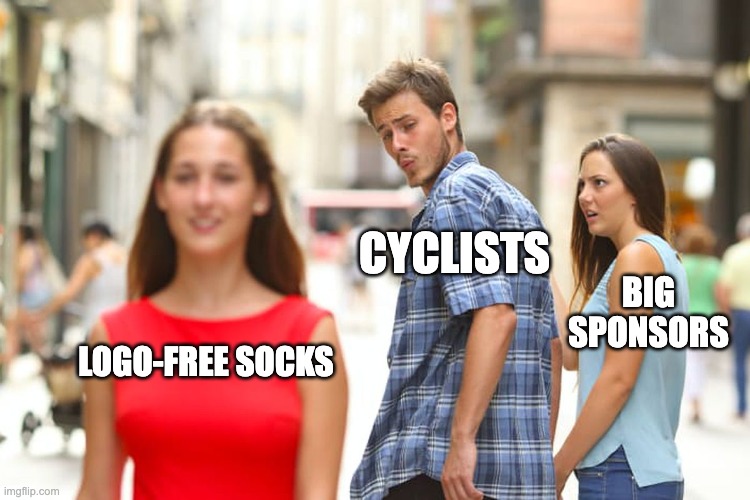
In sports, visibility usually comes with a massive price tag. Nike, Adidas, and other giants pour millions into sponsorships to plaster their logos across jerseys, shoes, and podium photos.
That's the traditional playbook: → Pay for exposure. → Force adoption through contracts. → Use visibility to create desirability.
But Sockeloen, a tiny Dutch sock startup, proved there's another way.
At the 2024 World Championships, the highest-paid cyclist in the world - Tadej Pogačar - crossed the finish line in Sockeloen socks. And here's the kicker: Sockeloen didn't pay him a cent.
How Sockeloen won without a budget
Sockeloen didn't have Nike money. They didn't even have a sponsoring budget. So they played a different game: one built on product, credibility, and user insight.
1. Radical product innovation
They designed socks so aerodynamic they had to test them in a wind tunnel. Through hundreds of iterations, they discovered something fascinating: no single sock was the fastest at all speeds. So they built an entire lineup, each pair optimized for a specific velocity, and named them after their peak speed.
Suddenly, they weren't selling just socks. They were selling measurable performance gains.
2. Transparency as marketing
Most brands throw big claims at athletes: "X% faster," "Y watts saved." Sockeloen did the opposite: they published the data.
They wrote a white paper. They shared raw results with pro teams. They didn't hide behind flashy ads. They let facts speak.
In a world drowning in marketing noise, data became their differentiator.
3. Adoption through deep user insight
Here's where it gets really clever. Sockeloen knew pro riders were locked into sponsorship deals. Logos on equipment = off-limits.
If their socks carried a logo, no rider would touch them. That was the adoption blocker.
So they removed it. They sold their socks without logos, making them legally wearable under UCI rules. This tiny tweak turned a deal-breaker into a green light.
The result? Pros could now choose performance without breaking contracts.
The winning moment
At the 2024 World Championships, the strategy paid off. The world's best cyclist, with every brand clamoring for his attention, chose Sockeloen — not because of a contract, but because of performance.
That single shot when Tadej Pogačar cross the line**,** did more for their brand than any sponsorship deal could have.
And it cost… nothing.
What PMMs should learn
Sockeloen's story isn't just about socks. It's about how you approach adoption.
Most PMMs still default to the traditional levers: budget, exposure, campaigns. But adoption rarely comes from shouting louder. It comes from:
-
Solving edge cases nobody else dares to tackle.
-
Backing claims with irrefutable proof.
-
Understanding blockers to adoption and removing them.
-
Rewriting the rules of the game to play to your strengths.
That's how you win users, even when you don't have Nike money.
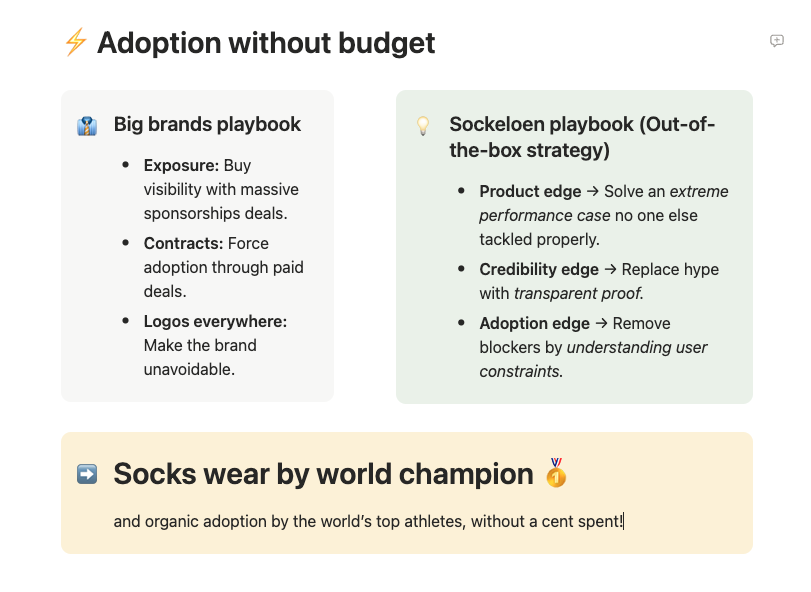
PMM takeaways: winning adoption without budget
-
Product edge → Don't storytell around hype, solve an extreme edge case that really matters.
-
Credibility edge → Proof beats exposure. Data, transparency, and results win more trust than campaigns.
-
Adoption edge → Study user constraints deeply. Remove blockers to make adoption frictionless.
📌 The Sockeloen lesson: Adoption doesn't come from the biggest budget. It comes from bold choices that align product, credibility, and user insight.
And if a sock startup can outplay billion-dollar sports brands, imagine what you can do in your market.